Secondary Substrates
An investigation of growing media for the HexaFlow Nanolab — from preliminary testing and a scored decision matrix to microgravity simulation results.
October Preliminary Substrate Test
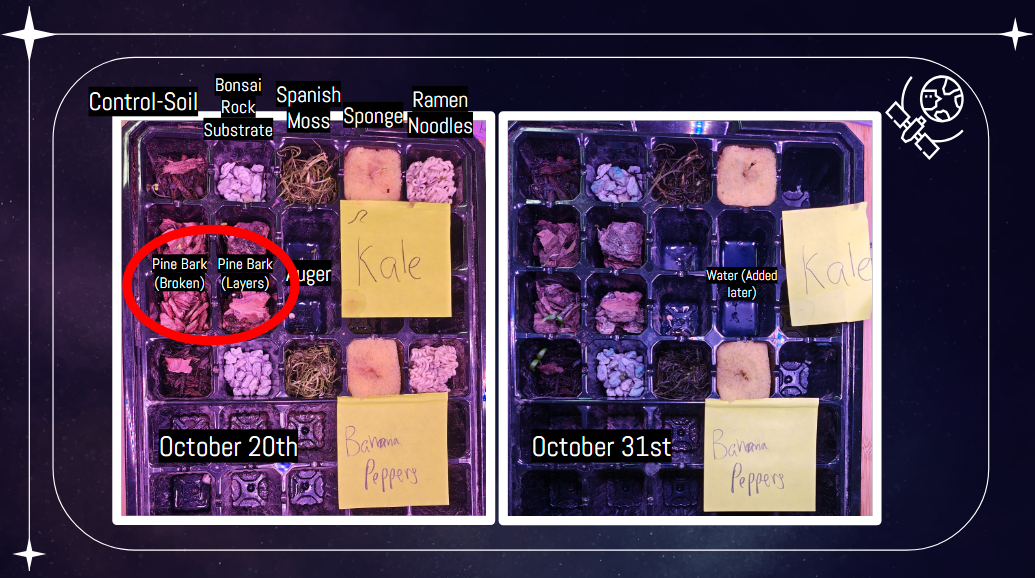
We grew kale and banana peppers in a variety of substrates under LED grow lights similar to the final Nanolab design, in a sealed chamber with water added as needed. Only pine bark yielded substantial plant growth, and mold grew very quickly in all substrates.
Substrate Decision Matrix
After doing much research about substrates that could work with our system and its needs, we narrowed our ideas to four substrates: pine bark, illite, rockwool, and clay pebbles. Each was scored from 1 to 5 on three criteria:
1 — Requires a complete rework of the system
5 — No modifications needed
1 — Loses vital properties in microgravity
5 — Properties improve in microgravity
1 — Supports only one type of plant
5 — Near-universal plant support
| Substrate | System Compatibility | Feasibility in μg | Modularity | Total |
|---|---|---|---|---|
| Pine Bark | 4 | 4 | 4 | 12 |
| Illite | 1 | 4 | 2 | 7 |
| Rockwool | 5 | 5 | 3 | 13 |
| Clay Pebbles | 4 | 4 | 4 | 12 |
Microgravity Simulation Test
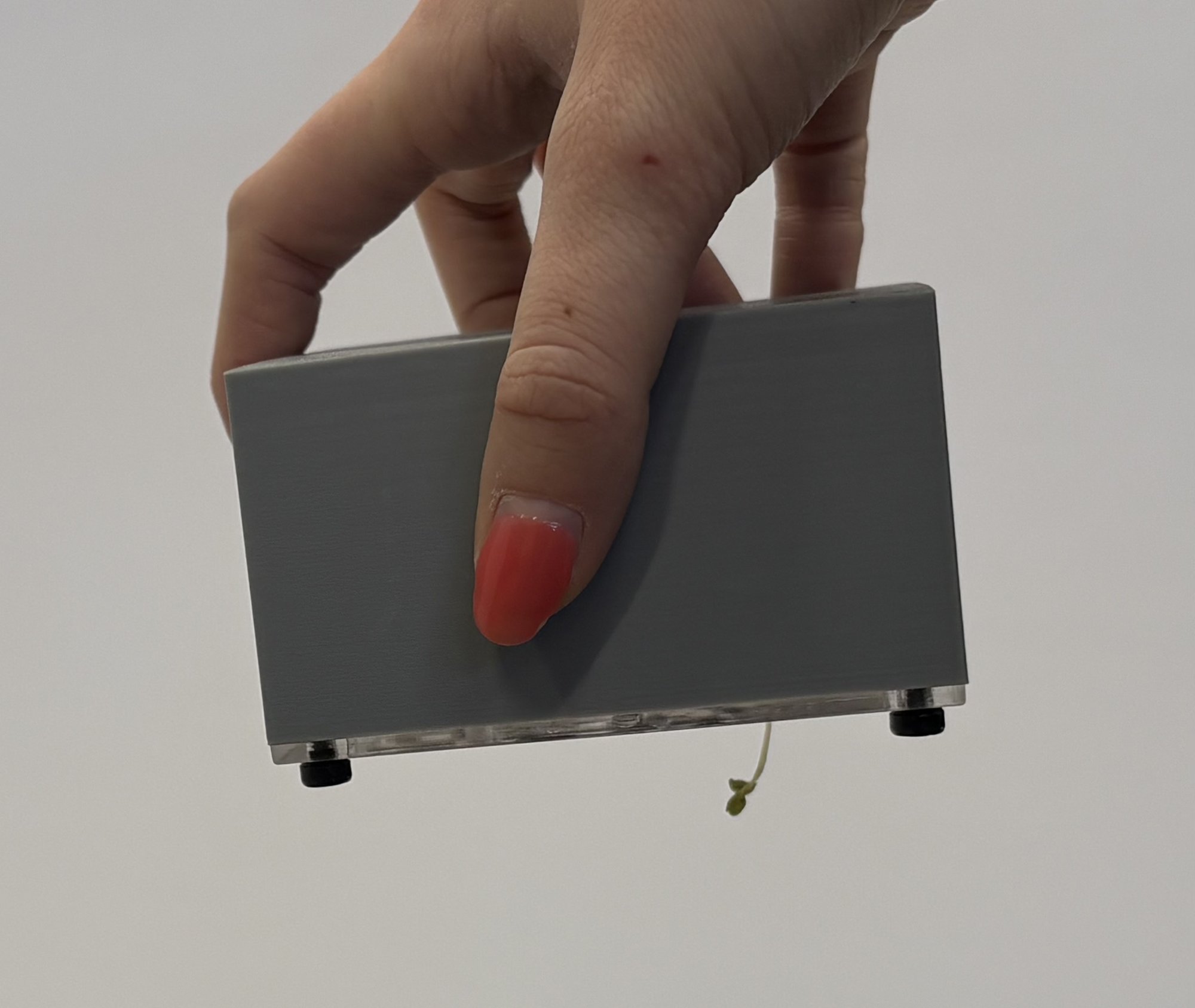
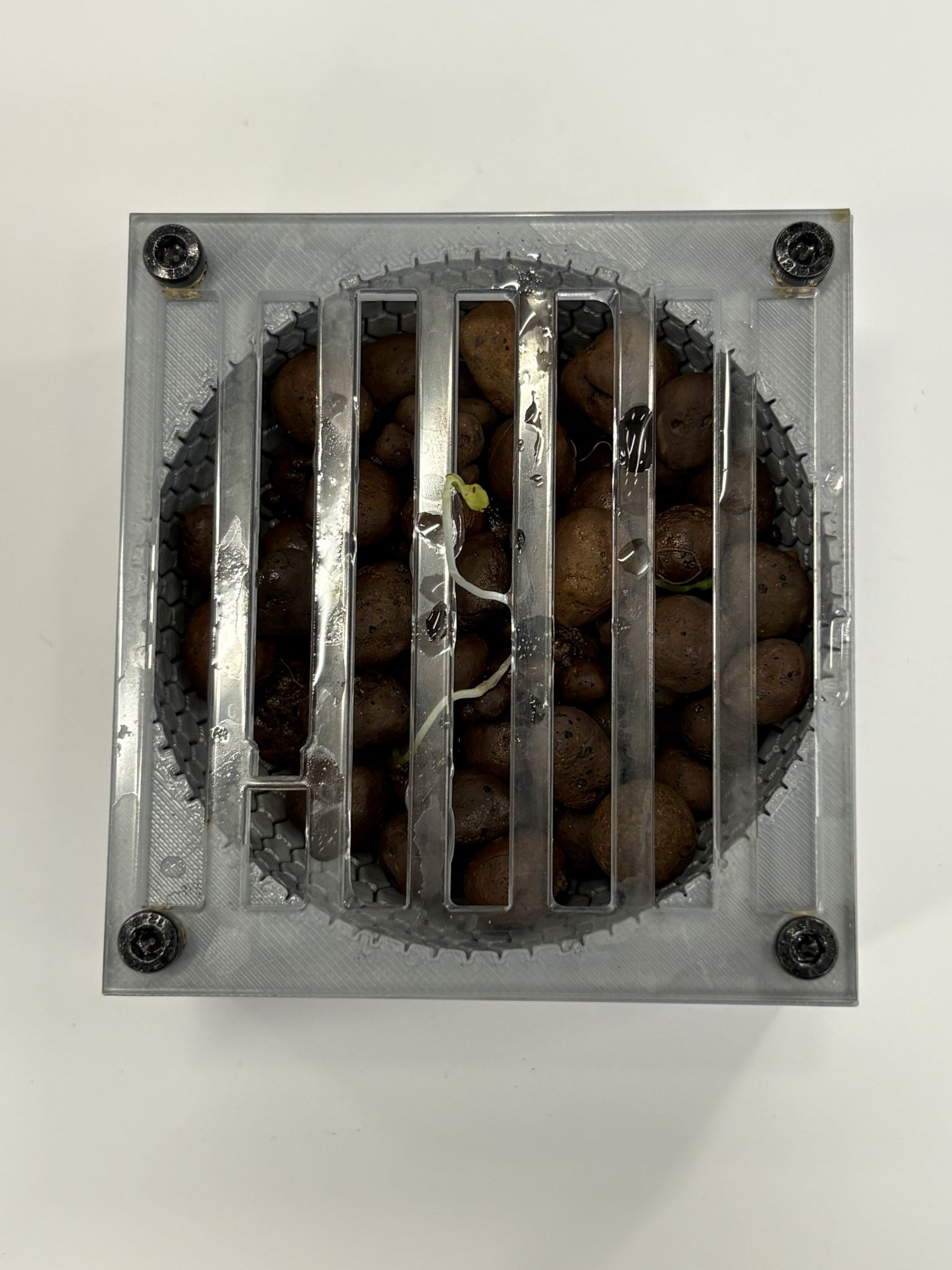
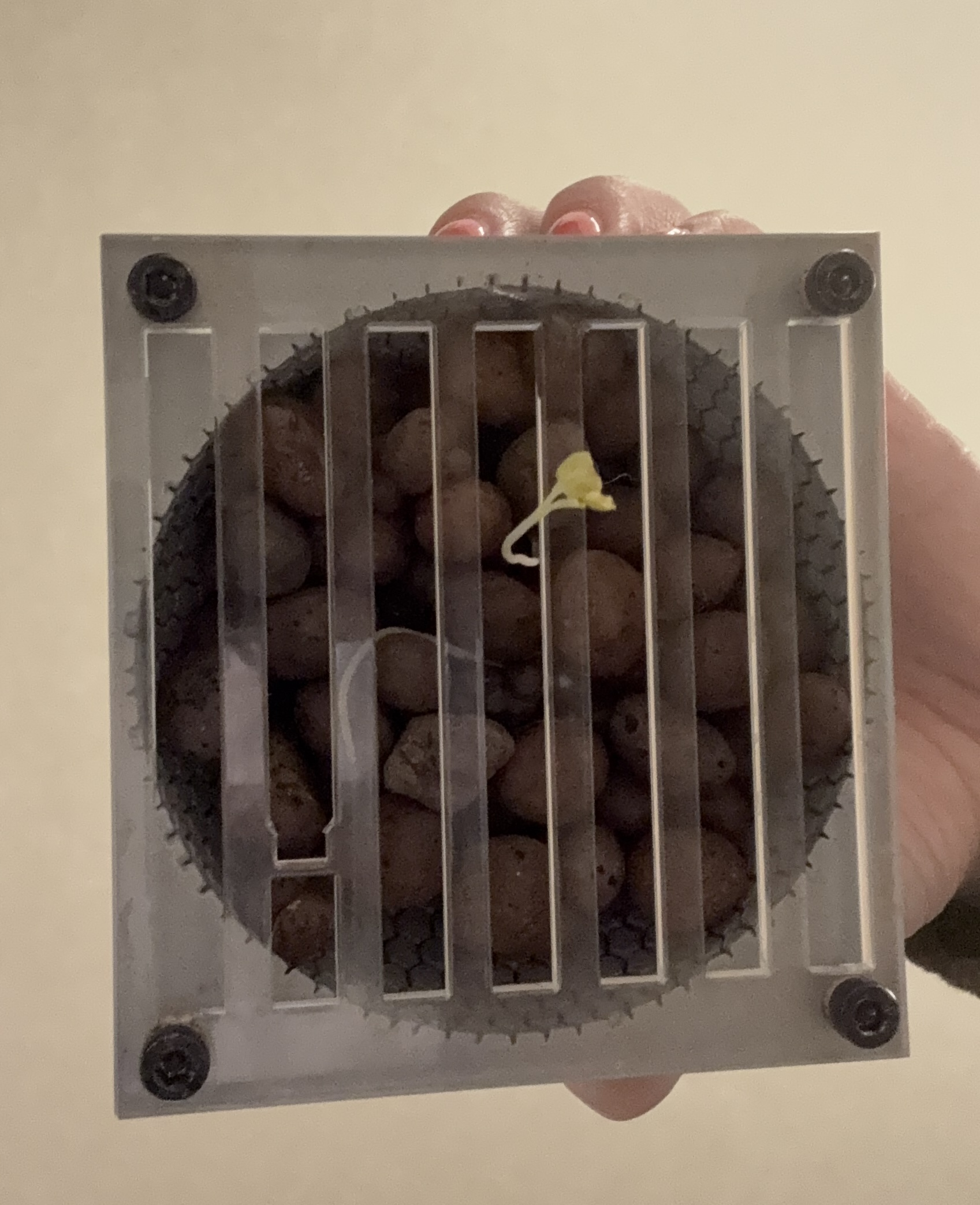
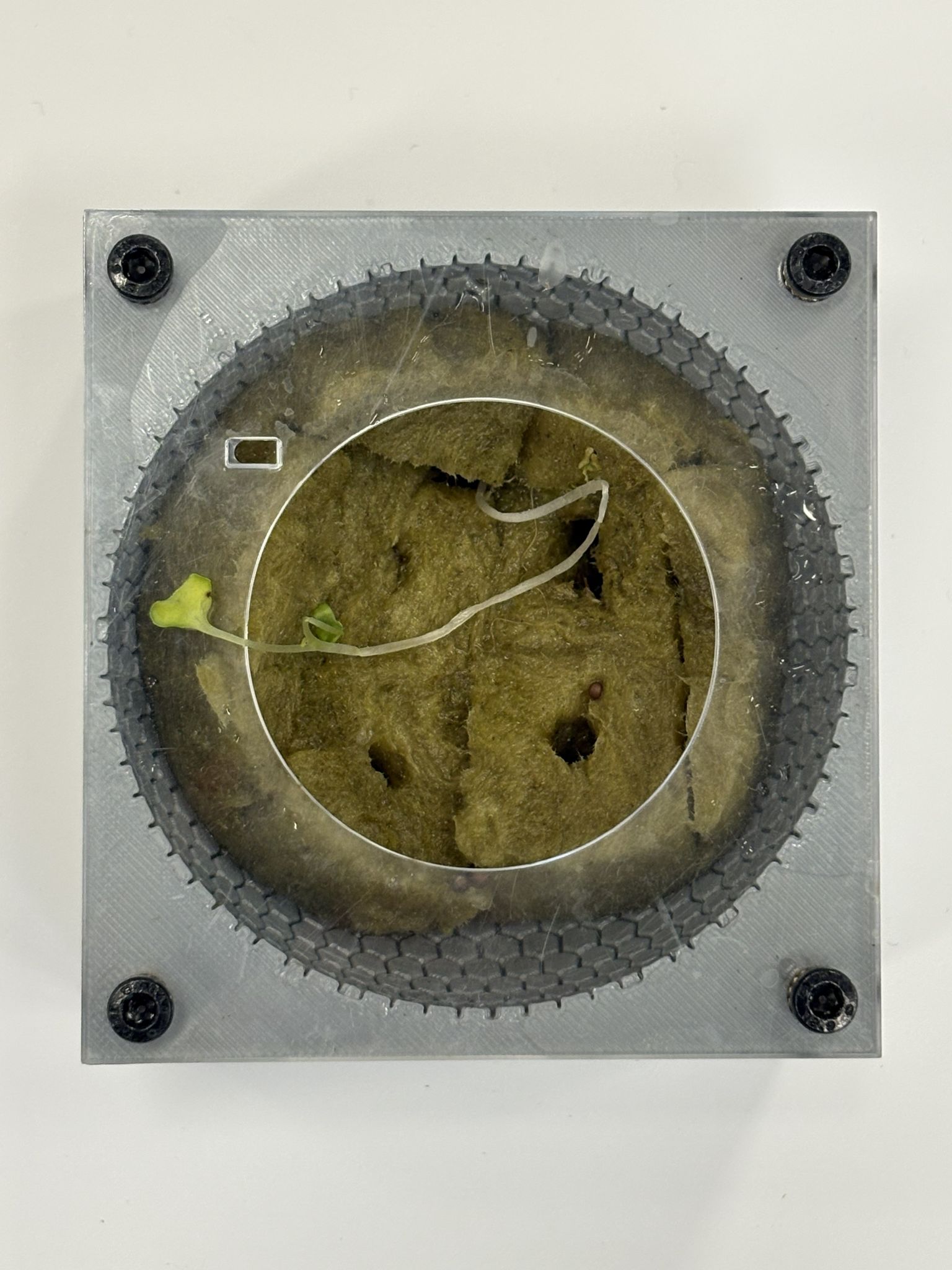
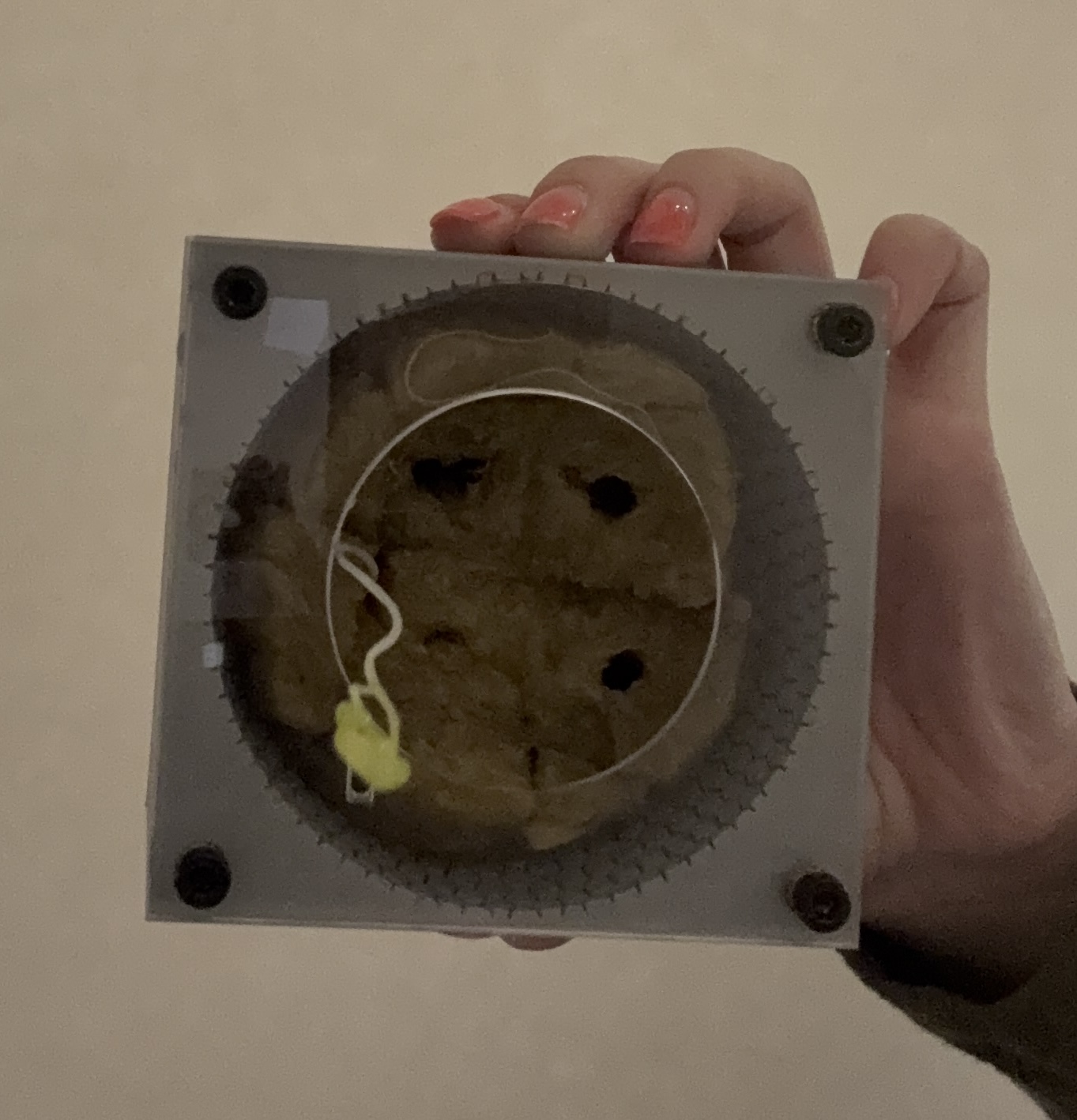
After planting pre-germinated seeds in the substrates, we held the plants upside down for one minute to see whether plants, covers, and substrates would stay in place while resisting gravity.
- Pre-germinated seeds planted in substrate
- Substrate covers secured
- Held upside down for 1 minute
Plants, covers, and substrates all stayed in place. Because the plants stayed inside the substrate when resisting gravity, we conclude they will stay rooted when there is no gravity present — both plants and substrates will stay inside the TDC Delivery System in microgravity.
Microgravity Test Photos
Works Cited (28)
- The Influences of Moisture on the Mechanical, Morphological and Thermogravimetric Properties of Mineral Wool Made from Basalt Glass Fibers
- Physical and Hydraulic Properties of Baked Ceramic Aggregates Used for Plant Growth Medium
- Hardware Validation of the Advanced Plant Habitat on ISS: Canopy Photosynthesis in Reduced Gravity
- CIPAIR Claflin 2012 NASA Student Intern Report — From Kennedy, to Beyond: Growing Plants in Space
- Sources of Plant Nutrients and Soil Amendments
- Hydroponics
- Hydroponic Systems
- Can Hydroponics Be Used in Space
- How Plants Absorb Nutrients and Create Fuel
- How Plants Absorb Nutrients
- Comparison of Substrate, Hydroponic and Aeroponic Cultivation Systems for the Production of Carrot Root
- A Comprehensive Guide to Rockwool Hydroponics
- FAQ — Frequently Asked Questions (ROCKWOOL)
- All You Need to Know About Growing With Stone Wool
- Microaggregate Growth in a Clay Undergoing Drying
- Particle Aggregation in Microgravity: Informal Experiments on the International Space Station
- Evaluation of the Particle Sizes of Four Clay Minerals
- Long Term Flocculation of Clay in the Absence of Gravity
- XRD-based 40Ar/39Ar Age Correction for Fine-Grained Illite
- LECA for Plants: One Secret to Thriving Indoor Gardens
- Which Plants Can You Grow in Leca?
- Illite — An Overview
- Illite (Britannica)
- Dynamic Role of 'Illite-Like' Clay Minerals in Temperate Soils: Facts and Hypotheses
- Clay Minerals as Influenced by Environments of Their Formation
- What Is Pine Bark and Is It Good for All Plants
- Organic Growing Medium: Choosing Pine Bark for Healthy Plants
- Plants That Grow Under Pine Trees