Drop Testing
On August 6, 2026, HexaFlow fell eight stories through NASA Glenn Research Center's 2.2-second drop tower — and the hex channels moved water in real microgravity.
NASA Glenn 2.2-Second Drop Tower
Nine teams from the NASA HUNCH final design showcase in Houston were invited to test at NASA Glenn Research Center in Cleveland. Ours was the one team that met every requirement in time, so we drove out to Ohio for the drop.
The 2.2-second drop tower is eight stories tall. We installed the nanolab in the test rig in the shop, the rig went inside a drag shield (so it falls free of air resistance), and the whole assembly was hoisted to the top of the tower, released, and caught by an airbag at the bottom. The camera logged a frame every 0.1 seconds, saved straight to the Pi's SD card because Wi-Fi drops out during the fall.
The Three Drops
Every frame the camera captured, played back in order. The first and last few frames of each run are in normal gravity — before release and after landing. Toggle between frame-by-frame and real speed.
The dome started completely dry. Before release the dyed water pooled as a blob around the nozzle; the moment the rig hit zero-g, capillary action snapped it away into the channels. A small bubble appeared and then went away.
Starting dry again, the water flowed out through the channels. A bubble formed at a channel junction from bottlenecking — exactly what our capillary flow calculations predicted — then shrank as the channels pulled water out of it.
With the data we needed already in hand, we left the water from the previous run in the dome to see how far the channels could saturate. Big bubbles formed at the switch to zero-g, but the water still distributed through the channels instead of pooling — with visibly more volume in each channel.
- The instant the rig reached zero-g, capillary action pulled the pooled water into the hex channels.
- The bubble we predicted from our capillary flow calculations formed at a channel junction — and then drained, which suggests bubbles wouldn't persist in a longer test.
- On our best run, water moved through the channels past the sensor inserts.
Interview with NASA HUNCH
Glenn Johnson of NASA HUNCH Design and Prototype walks through the drop tower and talks with our team about the experiment and results.
A Day at NASA Glenn
What impressed us most was how old everything was — equipment from decades ago, built to last and still in use for real research. We also toured the center: we walked inside the Icing Research Tunnel and its gigantic fan, and looked down the Zero Gravity Research Facility, the 5.18-second drop tower where the shaft is so deep you can see it curve.
If We Did It Again
Beat the glare
Fewer lights, true-white LEDs instead of RGB, and frosted LEDs to diffuse the light.
Test other fluids
Water at different temperatures, added nutrients, and other solutes — and how each changes surface tension and capillary behavior.
Pump in microgravity
With a longer drop or another zero-g platform, start pumping after release so the water goes straight into the channels without pooling first.
Beyond plants
Explore the geometry for other fluid problems in microgravity, like the medical field.
Keep the data link
Wi-Fi dropped as the rig fell, so we had to sprint downstairs to get signal and see the results. A link that survives the drop is at the top of the list.
Easier access
A more reliable USB hub so bottom cameras work, a dome cover that comes off without all the screws, and more settings adjustable from the UI.
Before Glenn: Balcony Drops
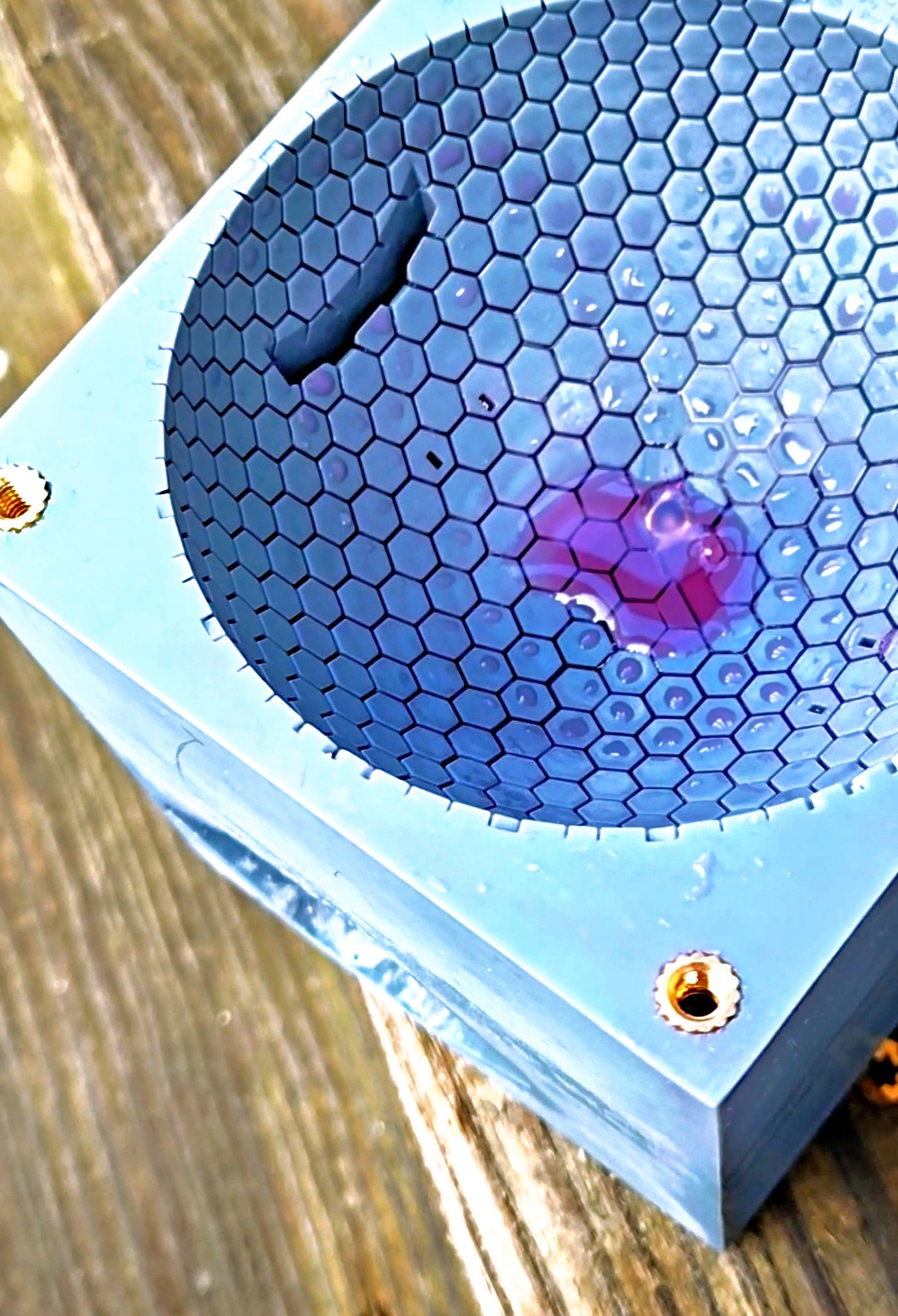
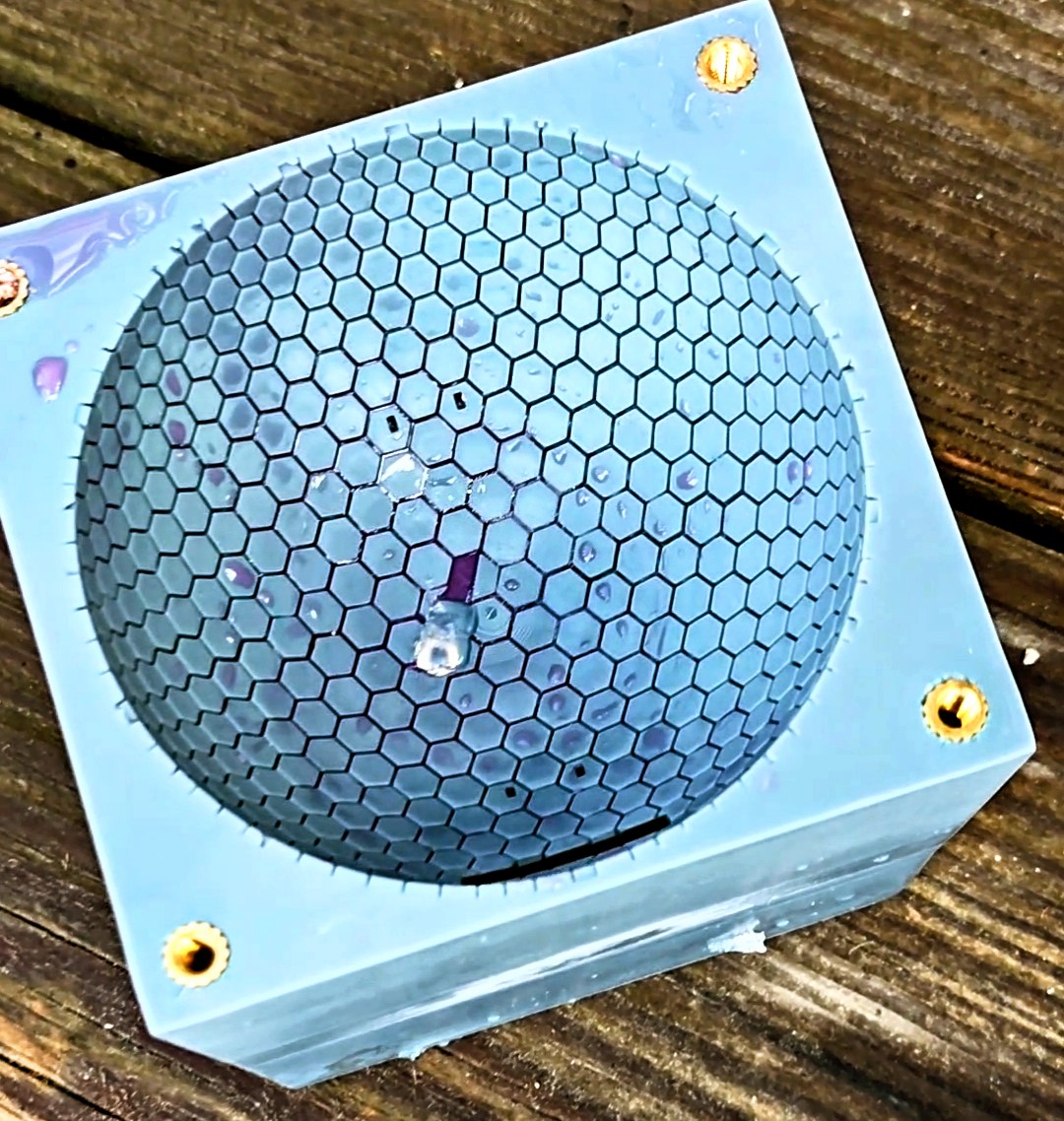
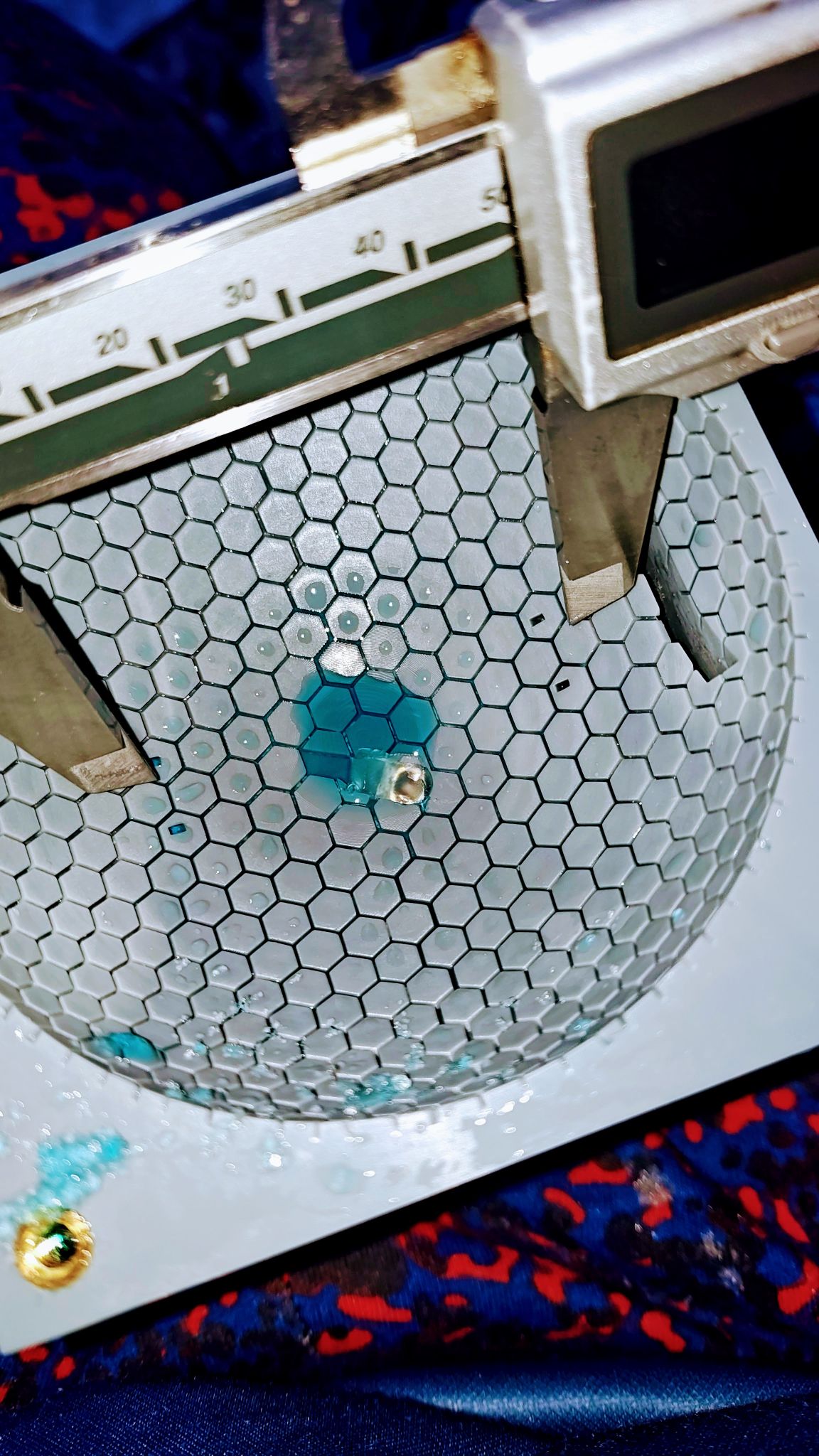
Before we ever reached Ohio, we dropped the bare TDC — the original "brick" — from 14 feet off a balcony — about 0.9 seconds of free-fall per drop, onto a sweatshirt as a landing pad. Even in that short window we could watch how water actually moves through the channels.
Before each drop we add about 5 mL of dyed water to the TDC center and seal the injector hole. Calipers measure the dispersal pattern before and after, so every run is compared against its own baseline.
Between runs, compressed air clears the channels so each test starts clean. In weightlessness, water should climb upward into the channels by capillary action — reaching and hydrating the roots.
Balcony Drop Photos
Full test data and analysis live in the linked Google Sheet.
Open Capillary Physical Tests →